
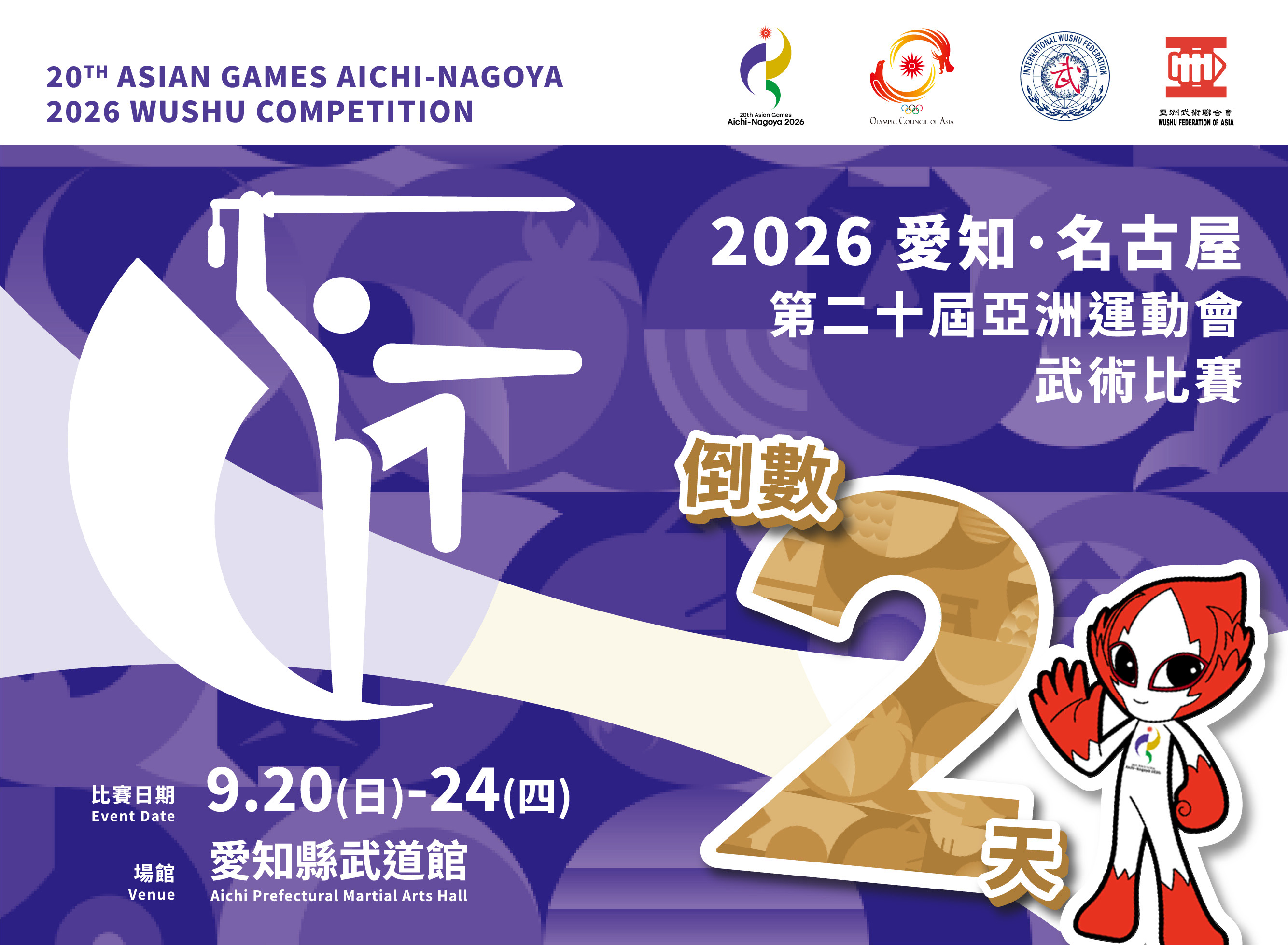
The Aichi Nagoya Asian Games is co-hosted by Aichi Prefecture and Nagoya City, Japan. As the third summer Asian Games held in Japan, this event breaks the tradition of building large-scale infrastructure by pioneering a low-carbon event model focused on "demand reduction and reactivating existing facilities."
This sustainability philosophy of "borrowing rather than building, renting equipment rather than buying" coincides with the Oriental philosophy in Wushu of "harmony between man and nature, and true mastery appearing simple." Host city Nagoya is not only the economic and industrial core of central Japan, but also the cradle of traditional Japanese martial arts (Budo—including Judo, Kendo, and Kyudo). Hosting martial arts events in a city rich in historical heritage and modern environmental consciousness not only showcases the highest level of competitive combat to all of Asia, but also deepens athletes' appreciation for the cultural transition of East Asian traditional martial arts into modern sports.
Aichi-Nagoya 2026 Asian Games Wushu | Host City Overview
Selecting Aichi Prefecture and Nagoya City for this Wushu competition holds profound cultural significance. In Japanese history, Aichi Prefecture (formerly Owari and Mikawa provinces) has long been hailed as the "artery and cradle of traditional Japanese martial arts." It is not only the birthplace and rise-to-power site of the three key figures of Japan's Sengoku period—Oda Nobunaga, Toyotomi Hideyoshi, and Tokugawa Ieyasu—but also the stronghold of the Owari Yagyu Shinkage-ryu, the official swordsmanship school of the Shogunate during the Edo period. For centuries, it served as a center for transmitting top-tier swordsmanship and hand-to-hand combat techniques. Instead of renting a conventional multi-purpose gymnasium, the organizers intentionally placed "traditional Chinese martial arts" in this sacred site that embodies the Japanese Bushido spirit.
Aichi-Nagoya 2026 Asian Games Wushu | Venue Overview
All Wushu Taolu and Sanda events for this Asian Games are scheduled at the Aichi Prefectural Martial Arts Hall in Nagoya. The venue received positive evaluations during the venue grading and technical assessment by the organizing committee:
Traditional Japanese Hall Atmosphere: Opened in 1993, the venue has long served as a core base for promoting traditional Japanese martial arts. Its architectural exterior features distinct Japanese styling, while the interior utilizes traditional Japanese lattice lines, high-ceilinged pillarless roof structures, and wooden floors to create a visually sacred, solemn, and intense competitive environment. This spatial sense rich in Eastern Zen perfectly complements the martial ethics emphasized in Wushu, such as "cultivating both internally and externally" and "respecting the master and the way."
Intimate Viewing Experience: The Wushu Taolu carpets and Sanda platforms are set up in an arena with 1,504 spectator seats, designed to allow live audiences to watch the competition from an extremely close distance.
Comprehensive Amenities & Multi-Combat Synergy: Beyond Wushu, the hall also serves as the competition venue for Ju-jitsu and Kurash. Hosting multiple combat and martial arts disciplines under one roof will make the Aichi Prefectural Martial Arts Hall the most culturally cohesive "martial arts hub" of these Asian Games.